Future Space Tech: NASA Develops Critical Innovations for a Permanent Lunar Base
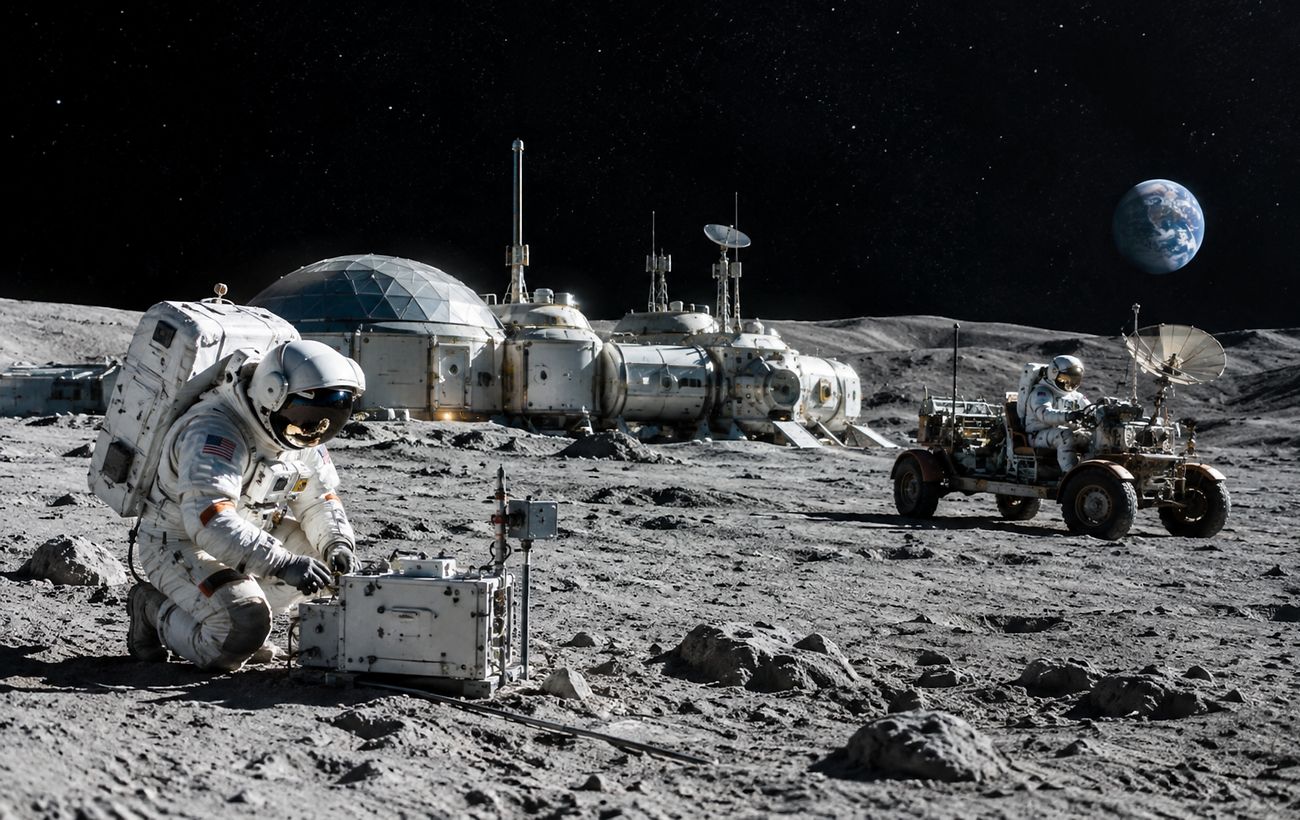
NASA is tackling key engineering challenges—from compact nuclear reactors to in-situ resource utilization—to establish a permanent human presence on the Moon.
 💡Tech
Photo: RBC-Ukraine
Key points
- NASA focuses on seven critical technologies for lunar habitation
- Lunar Reactor-1 is targeted for launch by 2030
- ISRU approach aims to utilize local lunar water and oxygen resources
Space exploration is steadily shifting toward long-term habitation beyond Earth, requiring advanced engineering breakthroughs. NASA and international researchers are currently focusing on core technologies needed to support a permanent lunar base, spanning energy generation, life support systems, and environmental protection.
Nuclear Power and Energy Solutions
Due to alternating two-week periods of lunar daylight and darkness, traditional solar panels alone cannot sustain a permanent base. To overcome this, engineers are developing vertical solar arrays, radioisotope generators, and compact nuclear reactors. The Lunar Reactor-1 is scheduled for delivery by 2030, ensuring a stable and reliable power supply regardless of environmental conditions.
Resource Utilization and Life Support
Transporting all supplies from Earth is economically unfeasible, so the strategy relies on In-Situ Resource Utilization (ISRU). This includes harvesting ice water from polar craters and extracting oxygen from lunar regolith. Furthermore, advanced closed-loop systems, dust mitigation shields, and regolith-shielded habitats are being engineered to protect astronauts and equipment from harsh space radiation and abrasive dust.
Source RBC-Ukraine — rbc.ua/ukr/news/vid-dernogo-reaktora-5g-shcho-potribno-nasa-1794836… ↗
Read next
 ⚽Sport
Basketball Superleague: Kyiv-Basket Defeats Zaporizhzhia to Avenge Previous Loss
Kyiv-Basket secured a home victory against BC Zaporizhzhia in the regular Superleague season with a score of 86:71, making up for their earlier defeat.
 🎭Culture & Sport
Intellectual warmup: how to solve the popular matchstick puzzle
Popular matchstick puzzles attract attention of logic enthusiasts worldwide. A non-standard approach allows correcting a mathematical error by moving just one single elem…
 👥Society
How to understand dog trust: Cynologists explain the meaning of pets' evening habits
The evening behaviour of four-legged friends can reveal a lot about their psychological state and level of trust in their owners.
 🎭Culture & Sport
Bundesliga Results: Leipzig's Big Win and Narrow Victories for Favorites
Matchday 10 of the German Bundesliga delivered impressive wins, including a thrashing by RB Leipzig and a narrow derby victory for Dortmund.
 🛡️Security
Fresh Russian Attacks on Dnipropetrovsk and Kherson Regions Leave 11 Injured
On Saturday, enemy shelling in the Dnipropetrovsk and Kherson regions injured a total of 11 civilians. Russian forces heavily used artillery, aviation, and drones.
 🎭Culture & Sport
Donald Trump Names Potential Successors for the 2028 US Presidential Election
The US President highlighted JD Vance and Marco Rubio among potential Republican candidates.